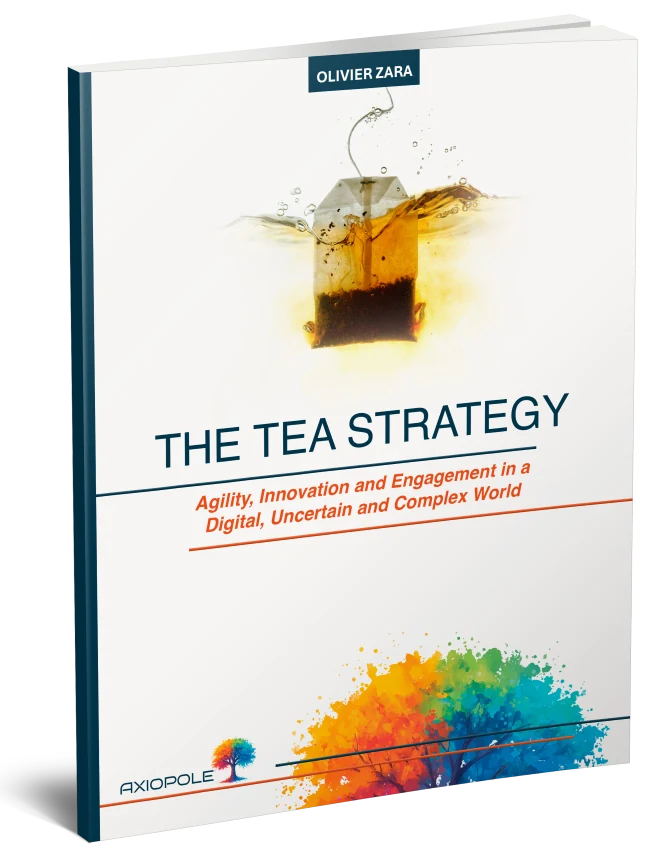
The book could be called “The T-Square Strategy,” so completely at right angles is it to conventional management methods and practices. Reading it reveals how important it is to manage complex situations differently from complicated ones.
Practical approaches such as sharing leadership, making appropriate use of hierarchical and collaborative relationships, and applying methods for collective creativity and intelligence are explained, helping readers understand how to master complexity, nonlinear phenomena and unprecedented situations.
The challenge with this book is that a first reading is not always enough to absorb the wealth of fresh concepts and tools it offers. You can sense the author's respect for his readers, and the reading needs to be followed by personal reflection to fully grasp his ideas and adapt the techniques to your own environment.
An important chapter is devoted to collective reflection: how to elicit relevant contributions regardless of hierarchy, expertise, seniority or level of responsibility. This is revolutionary because it calls the very foundations of managerial legitimacy into question. Yet, by mobilizing people's intelligence, it proves to be a powerful instrument for success, collective engagement and the inclusion of every talent.
This book is not for everyone. The Tea Strategy is intended only for organizations facing a shifting, unpredictable environment. The tools it describes are of little practical use to organizations operating in a stable, linear environment.
The Tea Strategy is also for organizations and individuals capable of combining humility with ambition. It takes considerable humility to admit that you do not understand the ramifications of a complex system whose interactions can sometimes be treacherous. At the same time, it takes great ambition to volunteer to lead the climb at the foot of an unknown mountain.
This book will be subversive for many established managers who, as they turn the pages, will inevitably sense that they are becoming more and more part of the problem and less and less part of the solution.
Marc Weltmann, Director of Nexidée, International Procurement Specialist & Former Armed Forces Commissary