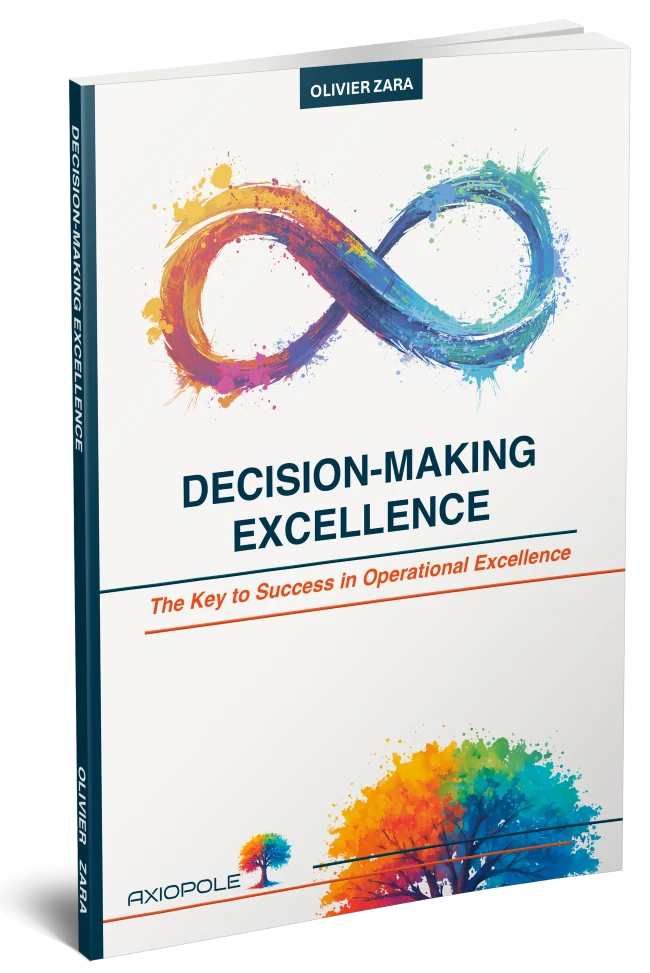
Among the books I have read on collective intelligence, some mention the need to move beyond the Taylorist paradigm at the heart of the bureaucratic middle layers throughout the twentieth century, allowing work to be devalued and customers to slip away (from being captive because supply was scarce to becoming a scarce resource, hard to retain amid an abundance of offerings). This is where Olivier Zara’s book comes in. How can we get rid of the Taylorist paradigm, with its distrust of work, and counter its devastating effects on engagement and motivation? The post-Taylorist ecosystem promotes collective intelligence and participatory management to encourage co-construction, which alone can foster engagement among those involved in decisions or affected by their implementation.
We need management that is aware:
- of the VUCA world and the biases that weaken our ability to decide and, therefore, to act;
- of the need to practice paradoxical management that combines Order (convergence) and Chaos (divergence), while fostering a high level of social connectedness within the team, which becomes its number-one priority.
In this book, I recognize influences we share, particularly Simon Sinek’s ideas about the Why, the How and the What, as well as the mechanisms of individual recognition. These references made the book easier to read. It also takes a close interest in the issues facing middle managers, of whom I am one. Moving beyond the Taylorist paradigm means moving from the role of a mere transmission belt, offering little recognition or engagement, to that of managing people, with all the challenges… and commitment that entails.
The book reads smoothly and offers real insights to anyone who encounters management in their daily work, whether as a manager or as someone being managed.
Xavier Richard, Branch Manager at Caisse d'Épargne CEPA